Hygiene and Zoonosis – Basics in Wildlife Rehabilitation

This short course only takes about two hours to complete, but it may be the most valuable two hours that you spend.

To keep yourself and your staff healthy, and to stop diseases from spreading through the animals that you care for, good hygiene protocols and zoonosis prevention needs to be in place. Knowing your risks and understanding how to reduce those risks is critical for all wildlife rehabilitators.

This short course only takes about two hours to complete, but it may be the most valuable two hours that you spend.

A certificate for 4 hours will be presented on successful completion of the course


Included:

Cleaning and Disinfecting in Wildlife Rehabilitation
Histoplasmosis
Zoonotic Diseases Common in Wildlife Rehabilitation
Disinfecting and Product Use
Creating a Zoonosis Protection Plan


Each student needs to sign the Terms of Service Agreement prior to each course


ENROLLMENT

Enrollment Fee = $27.99

To enroll in any course you must first create a student account at our course gateway. You may then enroll in the course(s) of your choice.

Payment is made at the time of course selection.

A certificate for 4 hours will be presented on successful completion of the course

Each student needs to sign the Terms of Service Agreement prior to each course

ENTER THE GATEWAY HERE

The COMPLETE Course in Raising Neonatal Cottontails

Cottontail bunnies are the most frequent animal patients in many wildlife rehabilitation centers.

??????????????

The developmental time from birth to weaning for bunnies is very short, and cottontails require fewer resources in time, space, and equipment than other baby mammal species. The high mortality rate, however, creates stress and frustration for the rehabilitator causing many rehabilitation centers to refuse bunnies or limit their intake.

Over two decades, Red Creek has developed protocols designed not only to duplicate what the bunny receives from the mother and the environment but also eliminating factors they would not normally be exposed to in nature.

In this course, the student will learn not only our protocols, but understand the reasons behind the methods so adjustments can be made in individual cases.

A written exam will be given at the end of class. A passing score is 80% . Students successfully passing the final exam receive a certificate for 12 hours of wildlife rehabilitation education.

Training Includes:

Understanding the Nest
Testing the Nest
Identifying True Emergencies
Aging Juveniles
Stress in Cottontails
Stabilization and the Cursory Exam
Determining Dehydration
Understanding Fluid Replacement Therapy
PH Balance Effect of Dehydration
Rehydration – How Much to Give
Rehydration – Administration Routes
Making a Neonatal Incubator
Understanding the Juvenile Cottontail’s Digestive System
Milk Formulas
Neonatal Care – Substrate and Stimulation
Neonatal Care – Feeding Protocols
Preventing Metabolic Bone Disease
Weaning 1
Weaning – Food Choices
Tularemia and Pox Virus
Parasites
Cleaning and Disinfecting
Creating a Zoonosis Protocol

A certificate for 12 hours will be presented on successful completion of the course

Each student needs to sign the Terms of Service Agreement prior to each course


ENROLLMENT

Enrollment Fee = $59.99

To enroll in any course you must first create a student account at our course gateway. You may then enroll in the course(s) of your choice.

Payment is made at the time of course selection.

ENTER THE GATEWAY HERE

Wildlife Capture and Transport – All States

This entertaining and enlightening course covers the basics of wildlife capture in the field.

For those seeking training in the capture and transport of wildlife, this eight-hour course will help you learn these skills safely.

This entertaining and enlightening course covers the basics of wildlife capture in the field including legal issues, safety, equipment, recognizing true emergencies, proper capture and handling techniques, public relations and education.

A written exam will be given at the end of class. A passing score is 80% .

Contents:

Introduction
Pennsylvania Laws and Regulations
Preparation
Initial Public Contact
Situational Planning
Adult Emergencies
Understanding Rabies
Baby Wildlife Emergencies
Common Baby Mammal Calls
Common Baby Bird Calls
Handling Raptors
Handling Non-Raptors
Handling Mammals
Capture
Entrapment
First Aid
Transport

A certificate for 8 hours will be awarded on completion of the course.

Each student needs to sign the Terms of Service Agreement prior to each course


ENROLLMENT

Enrollment Fee = $49.99

To enroll in any course you must first create a student account at our course gateway. You may then enroll in the course(s) of your choice.

Payment is made at time of course selection.

ENTER THE GATEWAY HERE

Medical Math for the Wildlife Rehabilitator


FORGET MEMORIZING COMPLICATED FORMULAS

Designed by veteran wildlife rehabilitator, Peggy Hentz, this medical math course takes you from the very simple to the complex in an understandable and easy to follow structured learning experience. 

The interactive problems will have you calculating in no time.

In wildlife rehabilitation, basic math calculations are needed when determining drug dosages, fluid therapy and feeding amounts.

In addition to being able to formulate and solve mathematical problems, the wildlife rehabilitator needs to be proficient in the use of several instruments of measure such as the weight scale and syringes.

An understanding of the metric system and the ability to covert to and from the US customary units is essential to proficiency in medical math.


During this course, we will cover all of the necessary skills to calculate accurate drug dosing and fluid therapy for animals. The course is broken down into 5 sections:

  • Comparative (Ratio) Math – the basis of proficient calculations
  • Drug dosage calculations
  • Understanding the metric system
  • Tools of the trade
  • Fluid Therapy

INCLUDES 28 PAGE STUDY BOOK

Course Information:

This self-paced, non-accredited course will prepare the wildlife rehabilitator to calculate various drug dosages as well as administer correct fluid therapy for dehydrated animals.

  • Ratio Mathematics
  • Mastering Drug Dosing
  • Metrics Made Easy for the Wildlife Rehabilitator
  • The Metric Conversion
  • Temperature conversion
  • Reading Syringes
  • Insulin Syringes
  • Needle Gauges
  • Understanding and Interpreting Drug Labeling
  • Diluting Medications
  • Reading Prescriptions
  • Scales
  • Formulary
  • Percentages
  • Stomach Capacity
  • Daily Fluid Requirements
  • Fluid Replacement Calculations
  • Step by Step Re-hydration
  • Finding the Whole of a Percentage (Normal Body Weight)
  • Three Day Re-hydration Protocol

A certificate will be awarded on completion of the course for six training hours.


ENROLLMENT

Enrollment Fee = $59.99

To enroll in any course you must first create a student account at our course gateway. You may then enroll in the course(s) of your choice.

Payment is made at the time of course selection.


ENTER THE GATEWAY HERE

Threatened & Endangered Certification for PA Wildlife Rehabilitators

Overview:

Pennsylvania Game Commission permits for wildlife rehabilitators include two additional authorizations for certain classes of animals: rabies vector species (RVS) and threatened and endangered (T&E) species.

This class is intended to deliver the knowledge necessary for a general wildlife rehabilitation permittee to be authorized to receive, treat and rehabilitate threatened and endangered species in Pennsylvania. Upon successful completion, a general permit wildlife rehabilitator can apply for T&E certification to be added to their permit class.

Objective:

Since general class rehabilitators already possess basic skills in stabilization, medical care, diet, rehabilitation, and release of distressed wildlife, this program is geared to understanding those aspects directly associated with receiving animals considered of special interest and listed as threatened and endangered in the Commonwealth.

Any rehabilitator can receive all wildlife species (even those outside of their permit class (mammal, non-raptor, raptor)). It is prudent for all rehabilitators seeking T/E authorization to be able to identify and give emergency care to all special listed species, even those outside of their permit class, so all species are covered in this course.

The information presented is also valuable to novice rehabilitator permittees, sub-permittees, capture and transport permittees, and volunteers.

INCLUDES 43 PAGE QUICK GUIDE

A certificate will be awarded on completion of the course for six training hours.


ENROLLMENT

Enrollment Fee = $59.99

To enroll in any course you must first create a student account at our course gateway. You may then enroll in the course(s) of your choice.

Payment is made at the time of course selection.


ENTER THE GATEWAY HERE

Red Creek Wildlife Center “Series Students” may enroll for free by LOGGING INTO THEIR ACCOUNT HERE.

Telephone Skills – Handling Wildlife Emergency Calls

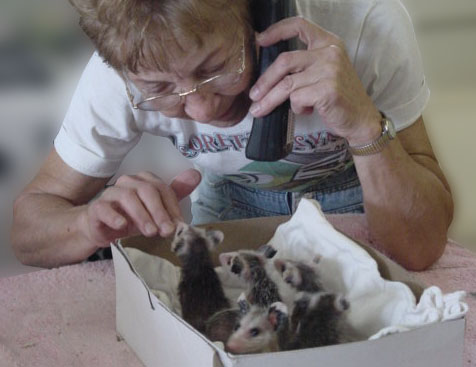
The volunteer who answers the phone is an important link between the wildlife center, the finder and the animal.

The information and emergency phone line 
is THE most important step in the wildlife rehabilitation process. 

When a person calls a wildlife center with an injured, orphaned, or sick wild animal, the ensuing conversation may be THE MOST IMPORTANT conversation in that animal’s life.

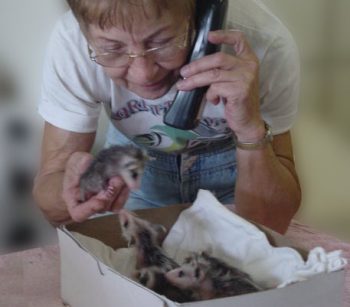
The decisions made by the finder will have an immense impact on its future.

In wildlife rehabilitation, much emphasis is placed on techniques, diet, and housing (and rightfully so), BUT having the right information during THE BEGINNING of the process is a CRITICAL STEP in the rehabilitation of that animal.

IT IS THAT IMPORTANT!

The volunteer who answers the phone is an important link between the wildlife center, the finder, and the animal. For the organization: you are THE representative that will leave a lasting first impression on the person calling. To the finder, you are their salvation from a very emotional situation.

For the animal, YOU are their lifeline to any chance of living a natural life.

Course Information:

This self-paced, non-accredited course will prepare the wildlife rehabilitation volunteer to answer emergency calls pertaining to injured, orphaned, and foundling wild animals.

This course includes:

  • Identifying Wildlife over the phone
  • Wildlife Education and Identification Resources
  • Wildlife Emergencies – Adult Animals
  • Abnormal Behavior / Rabies
  • Wildlife Emergencies – Baby Animals
  • Entrapment
  • Safety
  • Dealing with the Public
  • Verbal Judo and Personality Types
  • Wildlife Tips


A certificate will be awarded on completion of the course
for six training hours.


ENROLLMENT

Enrollment Fee = $29.99

To enroll in any course you must first create a student account at our course gateway. You may then enroll in the course(s) of your choice.

Payment is made at the time of course selection.


ENTER THE GATEWAY HERE


Wildlife Rehabilitation Essentials Workshop

Wildlife Rehab Essentials Training

This one day seminar covers the essentials in
stabilizing a wild animal.

Red Creek is once again offering this ESSENTIALS training, which includes hands-on practice with deceased birds and mammals. Although this course is designed wildlife rehabilitators, it is also valuable to those involved in exotic and small animal rescue.

Date

Saturday, April 13th, 2019

Time

9:00 am to 4:00 pm ( Doors open at 8:30am )

Location

23 Meadowbrook Center
23 Meadowbrook Drive
Schuylkill Haven, PA 17972
Directions (Google Maps)

This one day seminar covers the essentials in stabilizing a wild animal including:

Stress in the Wild Patient
Safe Handling
Intake and Exam (LAB)
Shock in the Wild Patient
Fluid Therapy
Injections (LAB)
Wounds and Stabilization
Bandaging (LAB)
Getting Involved in Wildlife Rehabilitation

Enrollment is Closed

Skills for a wildlife volunteer

Wildlife rehabilitation work is multifaceted and demanding. Many permit holders burn out, and their centers close after just a few years. Volunteers can be the difference between a rehabilitator staying open or closing forever.

Whether you are comfortable working with the animals or not, YOU have special talents that wildlife rehabilitators can use.

You can gain the skills and knowledge in two key area that are badly needed: answering phone calls and helping to capture wildlife in distress.

Wildlife Capture and Transport

This entertaining and enlightening course covers Openning Framethe basics of wildlife capture in the field including legal issues, safety, equipment, recognizing true emergencies, proper capture and handling techniques, public relations and education.

CLICK HERE FOR MORE INFORMATION

Telephone Skills – Handling Wildlife Emergency Calls

The volunteer who answers the phone is an important link between call2the wildlife center, the finder and the animal. For the organization: you are THE representative that will leave a lasting first impression on the person calling. To the finder, you are their salvation from a very emotional situation.

For the animal, YOU are their lifeline to any chance of living a natural life.

CLICK HERE FOR MORE INFORMATION

Get FULL-ACCESS to ALL of our Courses for $350.00

Why do we make this offer?

We offer these classes to save animals — Not to make money!

One of Red Creek Wildlife Center’s missions is to help other’s become wildlife rehabilitators. It is through these students that we can help save even more animals than just those who are admitted to our center. These courses are essential for new wildlife rehabilitators, and those studying to become a wildlife rehabilitator.

We can’t offer these courses for free because they cost us so much to produce, but we do try to keep our prices reasonable. We understand that wildlife rehabilitators often donate their time and pay for their own supplies. They can’t afford massive prices.

But we also want to be sure that those enrolling in our courses are committed and value the education. Once someone makes the investment of enrolling in full-access, we want to help them as much as we possibly can in the future. We do this by including all of our courses produced by Red Creek in the future without ever charging again. No yearly fees, no hidden surprises.

Have you purchased individual classes already?

Sign up for FULL-ACCESS and get credit for the courses you’ve already paid for. We refund your past enrollment fees to your PayPal account once you are enrolled, and we’ve confirmed your past enrollment!

SIGN UP TODAY!
$350.00

(I guarentee 100% privacy. Your information will NEVER be shared)

CLICK HERE


A gift for wildlife rehabilitators

As a service to our wildlife rehabilitation friends, we offer you this free movie on imprinting to show to your volunteers. At Red Creek Wildlife Center this movie is part of the first day of training for every new volunteer.

As wildlife rehabilitators, one big problem we face is getting volunteers to understand the damage done to an animal if they are babied or coddled. Imprinting causes irreparable harm.

As a service to our wildlife rehabilitation friends, we offer you this free movie on imprinting to show to your volunteers. At Red Creek Wildlife Center this movie is part of the first day of training for every new volunteer.

We hope it helps you help the animals.